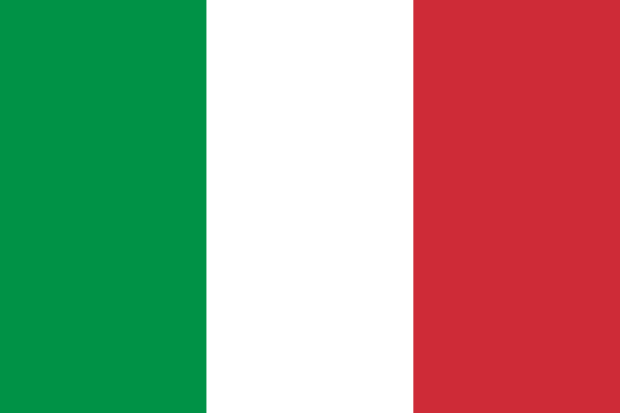
Italy

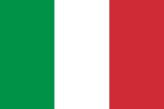
Country flag available in this resolutions
| Icon 32x21 | ![]() |
| Icon 88x59 | ![]() |
Italy
Italy, a nation of profound historical and cultural significance, stands as a cornerstone of Western civilization. Shaped like a distinctive boot, extending into the Mediterranean, it’s a cradle of innovation. From the majestic Alps to the sun-drenched shores of Sicily, Italy boasts diverse landscapes and a rich heritage, pivotal in shaping global thought, art, and governance throughout its long and captivating history. Its enduring appeal lies in this unique blend of ancient legacy and vibrant modern life.
Geographically, Italy’s distinct peninsular shape is defined by the towering Alps forming its northern border and the Apennine Mountains running down its spine, creating varied microclimates from temperate north to Mediterranean south. Its extensive coastline, stretching over 7,600 kilometers, embraces the Adriatic, Ionian, and Tyrrhenian Seas. The country also includes the large, culturally distinct islands of Sicily, famous for Mount Etna, and Sardinia, known for its rugged beauty. This diverse geography has profoundly influenced Italy’s regionalism, trade routes, and strategic importance, making it a pivotal point for maritime exploration and cultural exchange.
Italy’s millennia-long history began with the mighty Roman Empire, which emerged from a small settlement to dominate the Mediterranean world for centuries, profoundly influencing law, engineering, and governance. After its decline, the peninsula saw the flourishing of numerous city-states during the Renaissance (14th-16th centuries). This era, centered in cities like Florence, Venice, and Rome, was one of unparalleled artistic and scientific innovation, producing masterpieces by figures such as Leonardo da Vinci and Michelangelo. National unity was eventually achieved in the Risorgimento, leading to the proclamation of the Kingdom of Italy in 1861. The 20th century brought significant challenges, including two World Wars and the rise of fascism, culminating in the establishment of a democratic republic in 1946. Today, Italy is a vibrant modern nation, preserving its rich heritage while actively participating in global affairs.
Italy’s demographic landscape presents a complex picture, characterized by one of the world’s oldest populations and persistently low birth rates, with approximately 59 million people. This aging society places increasing strain on social welfare systems and labor markets, with fertility rates remaining well below replacement levels. A significant demographic divergence exists between the more industrialized and affluent North, which tends to attract internal migration, and the less developed South. Immigration from Eastern Europe, North Africa, and Asia plays a crucial role in mitigating population decline and supporting the workforce, though integration remains an ongoing societal challenge, profoundly impacting Italy’s future vitality and cultural evolution.
As the third-largest economy in the Eurozone and the eighth-largest globally, Italy boasts a highly diversified industrial base. Key sectors include world-renowned manufacturing in luxury goods, fashion (e.g., Milan), automotive (e.g., Ferrari), machinery, and high-quality food products. Tourism is also a vital pillar, attracting millions of visitors annually to its historical sites, artistic treasures, and natural beauty. Small and medium-sized enterprises (SMEs) form the backbone of the Italian economy, demonstrating remarkable innovation. However, Italy grapples with high public debt, regional disparities (a wealthier North versus a struggling South), and bureaucratic inefficiencies. Despite these hurdles, Italy remains a significant global economic player, deeply integrated into the European Union, continuously striving for structural reforms and sustainable growth.
Italian culture is globally celebrated, deeply interwoven with daily life, and profoundly influential. Its cuisine, perhaps its most famous export, from pasta and pizza to exquisite wines and cheeses, is a cornerstone of national identity and an art form. The country is a veritable open-air museum, holding more UNESCO World Heritage Sites than any other nation, showcasing its unparalleled contributions to art, architecture, and historical preservation. Music, particularly opera, holds a special place, with composers like Verdi and Puccini leaving an indelible mark. Family values are paramount in Italian society, forming strong social networks. The concept of „la dolce vita“—the sweet life—reflects an appreciation for beauty, leisure, and enjoying life’s pleasures, making Italy an endlessly fascinating and vibrant nation.
Italy stands as a testament to human ingenuity, resilience, and an enduring passion for life. Its deep historical roots, unique geography, dynamic economy, and rich cultural heritage combine to form a nation of profound global significance. While facing contemporary challenges such as demographic shifts and economic reforms, Italy’s ability to innovate, adapt, and preserve its unique identity ensures its continued prominence on the world stage. It remains a land where ancient history breathes alongside modern life, where artistic masterpieces inspire, and where the simple pleasures of good food and company are cherished above all else, truly embodying its timeless appeal.
Information about country Italy
Automated text translation, excuse errors, please!
Informations are from the publication CIA The World Factbook.
Country Italy is situated in a location / continent Europe. Italy has an area of 301 340 km2 and 61 261 254 residents. The highest point has a height 4 748 above sea level. and it is called Mont Blanc. The lowest point is located at the level of 0 above sea level and it is named Mediterranean Sea. System of government is republic and the date of independence 17th March 1861. The capital city is Rome. Italy has the international abbreviation IT.
Italy - economy
Total gross domestic product (GDP) is 1 871 000 000 000 $. Total gross domestic product per capita in purchasing power parity is 30 900 $. GDP grows by 0.40 % a year. Inflation (consumer price index) is equal to 2.90 % a year. Italy have 25 080 000 working-age population (from a total population 61 261 254 people). Unemployment is at 8.40 %. Italy issued 5.10 % GDP to healt care and 1,80 % GDP to army. The public debt of the country is 120.10 % GDP. The total amount of foreign debt is 2 684 000 000 000 USD.
Italy - transport and telecommunications
Italy has 487 700 km of roads, 20 255 km of railway lines and 130 airports. The total length of waterways (navigable rivers, canals, etc.) is 2 400 km. There is registered 681 ships.
Number of active mobile phones (sim card) in the country Italy is 92 300 000. Number of active fixed telephone lines is 21 060 000. Italy has 29 235 000 internet users, who have the available 25 456 000 Internet connections. Italy has been assigned a domain first Choose range .it.
Italy - demography
As suggested above, Italy has 61 261 254 people. Population growth is in the amount 0.38 % per year. Number of children born per 1000 population per year is 9.06.Every mother has average 1.40 children. The infant mortality rate is 3.36 and maternal mortality 4.00 deaths per 100,000 births. Average estimated life expectancy makes 81.86 years. Mortality is 9.93 people per 1000 population per year.
Italy - energetics
Italy consumes a year 296 300 000 000 kWh of electricity. Annual electricity production is 279 000 000 000 kWh in power plants with a total installed electrical capacity 101 200 000 kW. Italy exports 1 817 000 000 kWh and imports 45 760 000 000 kWh of electricity per year Energy mix of power generation is as follows: fossil fuels: 70.3 %, nuclear energy: 0 %, renewable: 8.6 %, hydropower: 13.7 %. The country Italy is harvested annually 111 800 barrels of oil.
Flags of countries
World flags
World countries flags
Dále doporučujeme:
Odkazy na užitečné webové stránkyOdkazy nejen na naše partnerské weby
Odkazy na zajímavé weby
Doporučené internetové odkazy
Odkazy na partnerské weby
![]() |
![]() |
![]() |
![]() |
![]() |
![]() |
![]() |
![]() |
![]() |
![]() |
![]() |
![]() |
![]() |
![]() |
![]() |
![]() |
![]() |
![]() |
![]() |