China

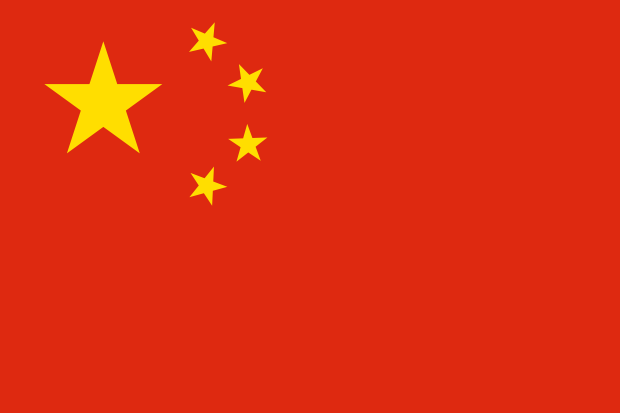
Country flag available in this resolutions
| Icon 32x21 | ![]() |
| Icon 88x59 | ![]() |
China
China, officially the People’s Republic of China (PRC), is a civilization of immense antiquity and a modern global power. Spanning a vast territory, with over 1.4 billion people and the world’s second-largest economy, China’s influence is profound, blending ancient traditions with rapid development and significant global implications. From its ancient philosophical traditions to its cutting-edge technological innovations, the nation presents a complex tapestry of historical endurance, rapid development, and profound global implications that continue to reshape the 21st century global landscape.
Geographically, China is the world’s third-largest country by land area, encompassing an immense and extraordinarily diverse terrain and sharing borders with 14 other nations. Its topography is often described as a „three-step staircase“ descending from west to east: the high Tibetan Plateau, known as the „Roof of the World,“ and the towering Himalayan range dominate the west. Eastward, this high plateau gives way to a series of lower plateaus, basins, and deserts, such as the Gobi Desert. Further east, the landscape flattens into fertile plains and hills, home to the majority of its population and its major agricultural regions. Two of the world’s great rivers, the Yangtze and the Yellow River, originate in the western highlands and flow eastward, serving as crucial arteries for transportation, agriculture, and cultural development for millennia, shaping the very cradle of Chinese civilization. This varied geography provides a rich array of climates, from subarctic in the north to tropical in the south, contributing to a vast biodiversity and presenting both opportunities and challenges for its inhabitants.
China’s history is a continuous narrative spanning over 5,000 years, marked by dynastic cycles, periods of unity and fragmentation, and profound cultural achievements. The earliest recorded dynasties, such as the Xia, Shang, and Zhou, laid the foundations for Chinese philosophical thought, including Confucianism and Taoism, which continue to influence society today. The Qin Dynasty (221–206 BCE) unified China for the first time under a centralized imperial system, building parts of the Great Wall and standardizing writing and currency. The subsequent Han Dynasty (206 BCE–220 CE) expanded the empire, established the Silk Road, and saw a flourishing of science and arts, solidifying the identity of the „Han Chinese.“ Later dynasties like the Tang (618–907 CE) and Song (960–1279 CE) periods are considered golden ages of cultural and technological innovation, with inventions such as printing, gunpowder, and the compass. The last imperial dynasty, Qing (1644–1912 CE), faced increasing pressure from Western powers in the 19th century, leading to the „century of humiliation“ and its eventual collapse. This led to the establishment of the Republic of China in 1912, followed by decades of civil war between the Kuomintang and the Chinese Communist Party (CCP). On October 1, 1949, Mao Zedong proclaimed the founding of the People’s Republic of China, ushering in a new era of socialist governance. Since the late 1970s, under Deng Xiaoping’s leadership, China embarked on a path of „reform and opening up,“ shifting towards a socialist market economy and achieving unprecedented economic growth.
As the world’s most populous nation, China’s demographic profile is a subject of immense global interest and internal complexity, with its population currently exceeding 1.4 billion people. The vast majority, approximately 92%, belong to the Han Chinese ethnic group, but the nation is also home to 55 officially recognized ethnic minorities, including Zhuang, Manchu, Hui, Miao, Uyghur, Yi, Mongolian, and Tibetan peoples, each with their distinct cultures, languages, and traditions, primarily concentrated in the western and southwestern regions. For decades, China implemented strict population control measures, most notably the „one-child policy“ from 1979 to 2016, which significantly curbed population growth but also led to unintended consequences such as a skewed gender ratio and an rapidly aging population. Recognizing these challenges, the policy was first relaxed to a „two-child policy“ and subsequently to a „three-child policy“ in recent years, aiming to address the declining birth rates and the impending demographic crisis of an increasingly elderly populace and a shrinking workforce. Urbanization has been a dominant trend in recent decades, with a massive migration from rural areas to burgeoning megacities, transforming China into a predominantly urban society. This rapid urbanization has fueled economic growth but also created immense pressures on infrastructure, resources, and the environment, while also creating a significant floating population of migrant workers who often lack full social benefits in their adopted cities.
China’s economic transformation over the past four decades is arguably one of the most remarkable stories of global development. From a largely agrarian and centrally planned economy in the late 1970s, it has evolved into the world’s second-largest economy by nominal GDP and the largest by purchasing power parity. This monumental shift was driven by Deng Xiaoping’s „reform and opening up“ policies, which gradually introduced market principles, privatized state-owned enterprises, encouraged foreign investment, and established Special Economic Zones. China rapidly became the „world’s factory,“ dominating global manufacturing in a vast array of industries, from textiles and electronics to machinery and consumer goods. While its initial growth was export-led, the economy is increasingly shifting towards domestic consumption, services, and high-tech innovation, with significant investments in artificial intelligence, biotechnology, renewable energy, and aerospace. Major Chinese companies like Huawei, Tencent, Alibaba, and ByteDance have become global leaders in technology and e-commerce. The ambitious Belt and Road Initiative (BRI), a massive infrastructure and investment project connecting China with Asia, Africa, and Europe, underscores its growing economic and geopolitical influence. However, this rapid growth has not been without its challenges: significant income inequality between urban and rural areas, severe environmental degradation, a heavy reliance on debt, and increasing trade tensions with major Western economies are persistent concerns that the government is actively attempting to address through policies aimed at „common prosperity“ and sustainable development.
Politically, China operates under a one-party system led by the Chinese Communist Party (CCP), which maintains tight control over all aspects of governance and society. The state’s centralized authority is evident in its robust national planning, extensive censorship, and sophisticated surveillance systems, which are used to maintain social stability and achieve national objectives. Culturally, China boasts a heritage of immense depth and diversity, rooted in Confucianism, Taoism, and Buddhism, which have shaped its ethics, social structures, and artistic expressions for millennia. Traditional arts such as calligraphy, opera, and landscape painting coexist with a vibrant contemporary cultural scene, influenced by both global trends and distinctive Chinese characteristics. Globally, China’s role has expanded dramatically. It is a permanent member of the UN Security Council, a major player in international organizations, and an increasingly assertive voice on global issues, from climate change to trade. Its military modernization, economic prowess, and geopolitical ambitions, particularly regarding issues like Taiwan and the South China Sea, have positioned it as a primary competitor to the United States and a central force in shaping the 21st-century world order. Balancing its internal development needs with its growing international responsibilities and navigating complex geopolitical relationships remains a critical task for China in the coming decades.
In summary, China is a civilization of profound historical depth and a nation of dynamic contemporary relevance. Its journey from ancient empires to a modern global power is a testament to its resilience, adaptability, and the sheer scale of its human and material resources. While grappling with the immense challenges of sustainable development, environmental protection, social equity, and geopolitical complexities, China continues to chart its unique course, profoundly influencing global economics, politics, and culture. Understanding China’s multifaceted nature — its geography, its long and often turbulent history, its complex demographics, its astonishing economic ascent, and its distinctive political and cultural identity — is crucial for comprehending the trajectory of the 21st century.
Information about country China
Automated text translation, excuse errors, please!
Informations are from the publication CIA The World Factbook.
Country China is situated in a location / continent East Asia. China has an area of 9 596 961 km2 and 1 343 239 923 residents. The highest point has a height 8 850 above sea level. and it is called Mount Everest. The lowest point is located at the level of -154 above sea level and it is named Turpan Pendi. System of government is Communist state and the date of independence First October 1949. The capital city is Beijing. China has the international abbreviation CH.
China - economy
Total gross domestic product (GDP) is 11 440 000 000 000 $. Total gross domestic product per capita in purchasing power parity is 8 500 $. GDP grows by 9.20 % a year. Inflation (consumer price index) is equal to 5.50 % a year. China have 795 500 000 working-age population (from a total population 1 343 239 923 people). Unemployment is at 6.50 %. China issued 4.60 % GDP to healt care and 4,30 % GDP to army. The public debt of the country is 43.50 % GDP. The total amount of foreign debt is 697 200 000 000 USD.
China - transport and telecommunications
China has 3 860 800 km of roads, 86 000 km of railway lines and 497 airports. The total length of waterways (navigable rivers, canals, etc.) is 110 000 km. There is registered 2 030 ships.
Number of active mobile phones (sim card) in the country China is 986 253 000. Number of active fixed telephone lines is 285 115 000. China has 389 000 000 internet users, who have the available 19 772 000 Internet connections. China has been assigned a domain first Choose range .cn.
China - demography
As suggested above, China has 1 343 239 923 people. Population growth is in the amount 0.48 % per year. Number of children born per 1000 population per year is 12.31.Every mother has average 1.55 children. The infant mortality rate is 15.62 and maternal mortality 37.00 deaths per 100,000 births. Average estimated life expectancy makes 74.84 years. Mortality is 7.17 people per 1000 population per year.
China - energetics
China consumes a year 4 693 000 000 000 kWh of electricity. Annual electricity production is 4 604 000 000 000 kWh in power plants with a total installed electrical capacity 877 700 000 kW. China exports 19 060 000 000 kWh and imports 55 450 000 000 kWh of electricity per year Energy mix of power generation is as follows: fossil fuels: 74.3 %, nuclear energy: 1 %, renewable: 2.3 %, hydropower: 22.4 %. The country China is harvested annually 4 073 000 barrels of oil.
Flags of countries
World flags
World countries flags

Dále doporuèujeme:
Tipy na Partnerské webyOdkazy na zajímavé weby
Zajímavé internetové odkazy
Linky na partnerské weby
Doporuèené odkazy a zdroje obsahu
![]() |
![]() |
![]() |
![]() |
![]() |
![]() |
![]() |
![]() |
![]() |
![]() |
![]() |
![]() |
![]() |
![]() |
![]() |
![]() |
![]() |
![]() |
![]() |