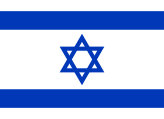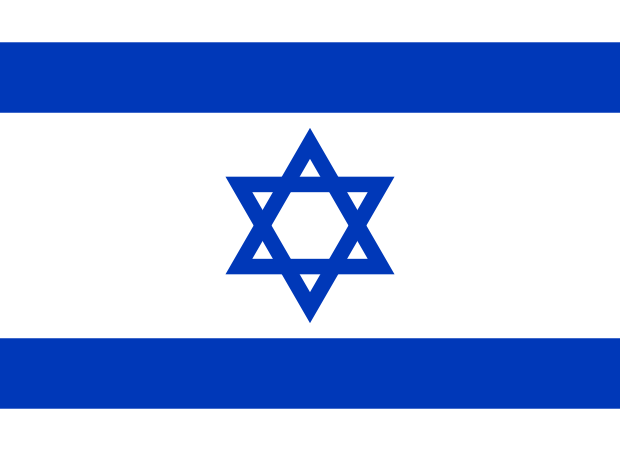
Israel

Country flag available in this resolutions
| Icon 32x23 | ![]() |
| Icon 88x64 | ![]() |
Israel
Israel, a nation situated on the eastern Mediterranean, is a land of profound historical, religious, and geopolitical significance. Despite its small geographical footprint, it holds a prominent global position, shaped by millennia of history, complex regional dynamics, and an extraordinary spirit of innovation. Its very narrative is a unique blend of ancient traditions and cutting-edge modernity, embodying remarkable resilience and a constant drive for progress.
Geographically, Israel presents striking contrasts, from the temperate Mediterranean beaches in the west to the arid Negev Desert in the south. Bordered by Lebanon to the north, Syria to the northeast, Jordan to the east, and Egypt to the southwest, its approximately 22,072 square kilometers (including East Jerusalem and the Golan Heights) encompass diverse regions. These include the fertile coastal plain, the central hill country with Jerusalem, the green hills of Galilee in the north, and the Jordan Rift Valley, home to the Dead Sea – the lowest point on Earth. This varied topography significantly influences its climate, ecology, and strategic importance, making it a unique crossroads of continents and cultures.
Israel’s History dates back over 3,500 years to biblical times and the establishment of ancient Israelite kingdoms. Following centuries of foreign rule by empires such as the Romans and the subsequent Jewish diaspora after 70 CE, a continuous Jewish presence endured in the land, fueled by the enduring aspiration for return to Zion. The late 19th and early 20th centuries witnessed the rise of Zionism, a political movement advocating for Jewish self-determination, which culminated in the British Mandate for Palestine after World War I. On May 14, 1948, the State of Israel was declared, a pivotal moment immediately followed by the 1948 Arab-Israeli War. This initiated a series of conflicts and ongoing peace efforts, with treaties signed with Egypt (1979) and Jordan (1994). The Israeli-Palestinian conflict remains a central challenge, reflecting complex historical narratives and territorial claims.
Israel’s Demography is remarkably diverse, with a population exceeding 9.8 million inhabitants. Approximately 73% are Jewish, representing a rich tapestry of communities including Ashkenazi (of European descent), Sephardi and Mizrahi (of Middle Eastern and North African descent), and Ethiopian Jews, each adding distinct cultural elements. The remaining 27% are primarily Arab citizens, encompassing Muslims, Christians, and Druze, who maintain their unique traditions and identities. A defining characteristic of Israel’s demography is the continuous immigration of Jews (known as Aliyah) from around the world, which has profoundly shaped the nation’s social fabric and driven its rapid population growth since its inception, creating a vibrant and dynamic society.
Transformed from an agrarian state in its early decades, Israel’s Economy is now a global leader in technology, earning it the moniker of the „Startup Nation.“ Lacking vast natural resources, the country has strategically invested heavily in human capital, fostering a dynamic ecosystem of innovation, cutting-edge research, and development. Key sectors driving its economy include cybersecurity, biotechnology, artificial intelligence, advanced manufacturing, and defense, with Tel Aviv and its surrounding areas often referred to as „Silicon Wadi“ for its concentration of tech companies. This high-tech prowess attracts significant international investment and drives substantial exports, ensuring Israel’s economic dynamism and global competitiveness despite regional complexities.
Israeli Culture and Society represent a vibrant synthesis of diverse global influences and deep Jewish tradition. Hebrew, a revived ancient language, serves as a powerful unifying force alongside Arabic, which also holds official status. The society balances ancient religious observance with modern secularism, fostering a dynamic environment for arts, music, literature, and scientific inquiry. The Israel Defense Forces (IDF), through mandatory conscription for most Jewish citizens, plays a significant role in society, fostering a strong sense of national identity and shared experience. This unique blend of heritage, innovation, and community resilience defines a forward-looking society that is both deeply rooted and constantly evolving amidst its unique geopolitical context.
In essence, Israel is a land of enduring paradox and remarkable achievement. It is an ancient nation continually innovating, a small country with immense global impact, and a society navigating profound historical legacies while striving for a secure and peaceful future. Its journey from a dream to a sovereign state, its demographic richness, its economic miracle, and its vibrant culture collectively represent an extraordinary human endeavor, reflecting resilience, technological prowess, and the unwavering determination of its people to shape their destiny against formidable odds.
Information about country Israel
Automated text translation, excuse errors, please!
Informations are from the publication CIA The World Factbook.
Country Israel is situated in a location / continent Middle East. Israel has an area of 20 770 km2 and 7 590 758 residents. The highest point has a height 1 208 above sea level. and it is called Har Meron. The lowest point is located at the level of -408 above sea level and it is named Dead Sea. System of government is republic and the date of independence 14th May 1948. The capital city is Jerusalem. Israel has the international abbreviation IS.
Israel - economy
Total gross domestic product (GDP) is 238 200 000 000 $. Total gross domestic product per capita in purchasing power parity is 31 400 $. GDP grows by 4.70 % a year. Inflation (consumer price index) is equal to 3.50 % a year. Israel have 3 204 000 working-age population (from a total population 7 590 758 people). Unemployment is at 5.60 %. Israel issued 9.50 % GDP to healt care and 7,30 % GDP to army. The public debt of the country is 72.80 % GDP. The total amount of foreign debt is 102 300 000 000 USD.
Israel - transport and telecommunications
Israel has 18 290 km of roads, 975 km of railway lines and 47 airports. There is registered 8 ships.
Number of active mobile phones (sim card) in the country Israel is 9 200 000. Number of active fixed telephone lines is 3 500 000. Israel has 4 525 000 internet users, who have the available 2 179 000 Internet connections. Israel has been assigned a domain first Choose range .il.
Israel - demography
As suggested above, Israel has 7 590 758 people. Population growth is in the amount 1.54 % per year. Number of children born per 1000 population per year is 18.97.Every mother has average 2.67 children. The infant mortality rate is 4.07 and maternal mortality 7.00 deaths per 100,000 births. Average estimated life expectancy makes 81.07 years. Mortality is 5.50 people per 1000 population per year.
Israel - energetics
Israel consumes a year 45 590 000 000 kWh of electricity. Annual electricity production is 53 550 000 000 kWh in power plants with a total installed electrical capacity 12 070 000 kW. Israel exports 3 783 000 000 kWh and imports 0 kWh of electricity per year Energy mix of power generation is as follows: fossil fuels: 99.7 %, nuclear energy: 0 %, renewable: 0.3 %, hydropower: 0.1 %. The country Israel is harvested annually 100 barrels of oil.
Flags of countries
World flags
World countries flags

Dále doporučujeme:
Zajímavé webové stránkyPartnerské internetové stránky
Odkazy na užitečné webové stránky
Linky na partnerské weby
Doporučené internetové odkazy
![]() |
![]() |
![]() |
![]() |
![]() |
![]() |
![]() |
![]() |
![]() |
![]() |
![]() |
![]() |
![]() |
![]() |
![]() |
![]() |
![]() |
![]() |
![]() |