Kyrgyzstan

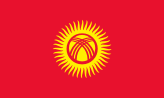
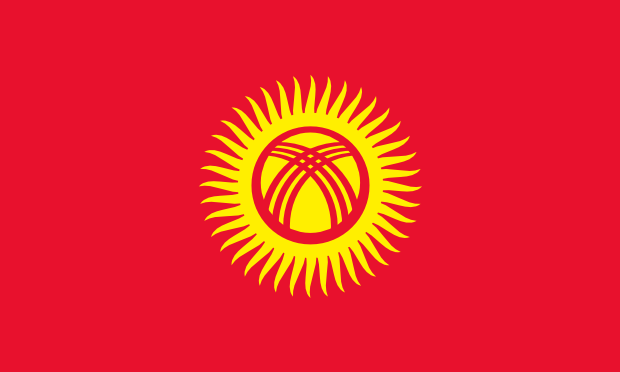
Country flag available in this resolutions
| Icon 32x19 | ![]() |
| Icon x | ![]() |
Kyrgyzstan
Kyrgyzstan, a landlocked nation nestled in the heart of Central Asia, is a country of breathtaking natural beauty, ancient nomadic traditions, and a complex history shaped by empires and the Silk Road. Often referred to as „the Switzerland of Central Asia“ due to its majestic, glacier-capped mountains, it offers a unique blend of rugged landscapes and a vibrant, resilient culture that has persevered through centuries of change. Its strategic location has historically made it a crossroads for various civilizations, leaving an indelible mark on its people and their way of life.
Geographically, Kyrgyzstan is overwhelmingly mountainous, with over 90% of its territory lying above 1,500 meters (4,900 ft) and 40% above 3,000 meters (9,800 ft). The towering Tian Shan mountain range, which translates to „Mountains of Heaven,“ dominates the landscape, featuring peaks like Jengish Chokusu (Pik Pobedy), the highest point at 7,439 meters (24,406 ft). These mountains are the source of numerous rivers and streams, feeding into fertile valleys like the Fergana Valley in the south and the Chüy Valley in the north, which are crucial for agriculture. The country is also home to Issyk-Kul Lake, the second-largest saline lake in the world after the Caspian Sea, a stunning natural wonder that never freezes despite its high altitude, earning it the moniker „warm lake.“ This diverse topography results in a varied climate, ranging from dry continental in the lowlands to polar in the high mountains, influencing everything from traditional nomadic pasturing to modern-day infrastructure development.
The history of Kyrgyzstan is a rich tapestry woven with threads of nomadic empires, foreign conquests, and a quest for identity. Early inhabitants were predominantly nomadic Turkic tribes, whose mobility and equestrian skills allowed them to thrive in the challenging mountainous terrain. The region was a vital segment of the ancient Silk Road, facilitating cultural and economic exchange between East and West, and leading to the establishment of important trading posts and cities. In the 17th and 18th centuries, the Kyrgyz people faced increasing pressure from the Kalmyks and later the Kokand Khanate, before gradually coming under the influence of the Russian Empire in the mid-19th century. After the Bolshevik Revolution, Kyrgyzstan became part of the Soviet Union as the Kirghiz Soviet Socialist Republic in 1936. The Soviet era brought significant changes, including forced collectivization, industrialization, and the suppression of traditional nomadic practices, alongside advancements in education and healthcare. With the collapse of the Soviet Union, Kyrgyzstan declared its independence on August 31, 1991, embarking on a challenging journey to establish its own democratic institutions and market economy, a path often marked by political instability and social transitions.
Demographically, Kyrgyzstan is a relatively small nation with a population of approximately 6.7 million people. It is a multi-ethnic country, though the ethnic Kyrgyz constitute the majority, comprising about 73% of the population. Significant minority groups include Uzbeks (around 15%), concentrated primarily in the south, and Russians (around 5%), who largely reside in the northern regions and urban centers. Smaller communities of Dungans, Uyghurs, Tajiks, and other ethnic groups also contribute to the country’s cultural mosaic. The official languages are Kyrgyz, a Turkic language closely related to Kazakh and Uzbek, and Russian, which holds the status of an official language and serves as a lingua franca, especially in business and urban areas. The predominant religion is Islam, specifically of the Sunni branch, which arrived in the region centuries ago and has blended with pre-Islamic shamanistic beliefs and traditions. Christianity, primarily Russian Orthodoxy, is practiced by the Russian and Ukrainian communities.
Economically, Kyrgyzstan is one of the poorer countries in Central Asia, facing significant challenges in its transition to a market economy. Agriculture remains a crucial sector, employing a substantial portion of the workforce and contributing significantly to the GDP, with livestock breeding, wool, meat, and dairy products being primary outputs. Cotton, tobacco, and fruits are also important crops. The country possesses valuable natural resources, including gold, coal, mercury, and uranium, with the Kumtor Gold Mine being a major contributor to export revenues, though its environmental impact remains a contentious issue. Remittances from Kyrgyz migrant workers abroad, especially in Russia, form a vital component of the economy, often surpassing foreign direct investment. The government has been working to attract foreign investment, develop its hydropower potential, and promote tourism, leveraging its stunning natural landscapes. However, corruption, political instability, and a lack of diversified industries continue to hinder sustained economic growth, making the country reliant on external aid and fluctuating commodity prices.
Culturally, Kyrgyzstan is deeply rooted in its nomadic heritage, which is reflected in its traditions, art, and daily life. The yurt, a portable felt dwelling, remains an iconic symbol and is still used by shepherds and for ceremonial purposes. Epic poetry, particularly the „Manas“ epic, a monumental oral tradition passed down through generations, is central to Kyrgyz identity, celebrating heroism and the nation’s ancient past. Hospitality is a cornerstone of Kyrgyz culture, with guests often treated to elaborate meals and warm welcomes. Traditional sports, music played on instruments like the komuz, and vibrant textiles like shyrdaks (felt rugs) are all expressions of this rich cultural tapestry. Despite the modernizing influences of globalization, the Kyrgyz people strive to preserve their unique customs and language, celebrating their distinct identity on the global stage.
In conclusion, Kyrgyzstan is a country of profound contrasts – of ancient traditions and modern aspirations, of breathtaking natural beauty and challenging socio-economic realities. Its people, resilient and resourceful, navigate the complexities of their post-Soviet identity while holding fast to their rich nomadic heritage. As it continues its journey into the 21st century, Kyrgyzstan’s future will undoubtedly be shaped by its ability to harness its natural resources responsibly, foster political stability, and build a diversified economy, all while preserving the unique cultural legacy that makes it such a captivating nation in the heart of Asia.
Information about country Kyrgyzstan
Automated text translation, excuse errors, please!
Informations are from the publication CIA The World Factbook.
Country Kyrgyzstan is situated in a location / continent Central Asia. Kyrgyzstan has an area of 199 951 km2 and 5 496 737 residents. The highest point has a height 7 439 above sea level. and it is called Jengish Chokusu (Pik Pobedy). The lowest point is located at the level of 132 above sea level. System of government is republic and the date of independence 31st August 1991. The capital city is Bishkek. Kyrgyzstan has the international abbreviation KG.
Kyrgyzstan - economy
Total gross domestic product (GDP) is 13 290 000 000 $. Total gross domestic product per capita in purchasing power parity is 2 400 $. GDP grows by 5.70 % a year. Inflation (consumer price index) is equal to 16.60 % a year. Kyrgyzstan have 2 344 000 working-age population (from a total population 5 496 737 people). Unemployment is at 8.60 %. Kyrgyzstan issued 4.10 % GDP to healt care and 0,50 % GDP to army. The total amount of foreign debt is 3 601 000 000 USD.
Kyrgyzstan - transport and telecommunications
Kyrgyzstan has 34 000 km of roads, 470 km of railway lines and 28 airports. The total length of waterways (navigable rivers, canals, etc.) is 600 km.
Number of active mobile phones (sim card) in the country Kyrgyzstan is 5 653 000. Number of active fixed telephone lines is 480 000. Kyrgyzstan has 2 195 000 internet users, who have the available 116 586 Internet connections. Kyrgyzstan has been assigned a domain first Choose range .kg.
Kyrgyzstan - demography
As suggested above, Kyrgyzstan has 5 496 737 people. Population growth is in the amount 0.89 % per year. Number of children born per 1000 population per year is 23.90.Every mother has average 2.73 children. The infant mortality rate is 30.78 and maternal mortality 71.00 deaths per 100,000 births. Average estimated life expectancy makes 69.45 years. Mortality is 6.93 people per 1000 population per year.
Kyrgyzstan - energetics
Kyrgyzstan consumes a year 7 290 000 000 kWh of electricity. Annual electricity production is 14 900 000 000 kWh in power plants with a total installed electrical capacity 3 640 000 kW. Kyrgyzstan exports 2 620 000 000 kWh and imports 535 000 000 kWh of electricity per year Energy mix of power generation is as follows: fossil fuels: 20.1 %, nuclear energy: 0 %, renewable: 0.0 %, hydropower: 79.9 %. The country Kyrgyzstan is harvested annually 1 000 barrels of oil.
Flags of countries
World flags
World countries flags

Dále doporučujeme:
Doporučené internetové odkazyTipy na zajímavé weby
Odkazy nejen na naše partnerské weby
Doporučené odkazy
Tipy na užitečné weby
![]() |
![]() |
![]() |
![]() |
![]() |
![]() |
![]() |
![]() |
![]() |
![]() |
![]() |
![]() |
![]() |
![]() |
![]() |
![]() |
![]() |
![]() |
![]() |