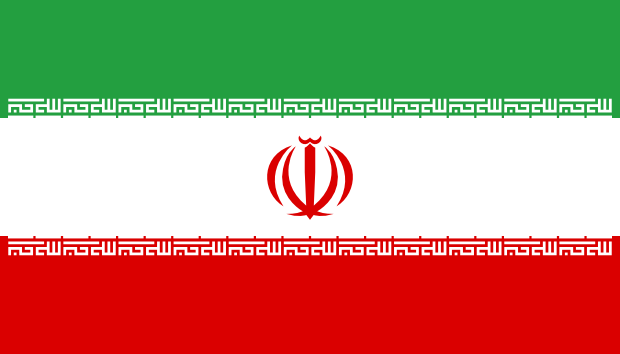
Iran

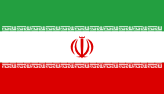
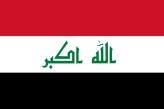
Country flag available in this resolutions
| Icon 32x18 | ![]() |
| Icon 88x50 | ![]() |
Iran
Iran, historically known as Persia, is a country of immense cultural depth, strategic geographical importance, and a rich, complex history that has profoundly shaped its identity and role in the world. Situated at the crossroads of Central Asia, South Asia, and the Middle East, Iran’s unique position has made it a cradle of civilization and a significant geopolitical player for millennia. Its official name is the Islamic Republic of Iran.
Geographically, Iran is a vast nation, covering an area of approximately 1.6 million square kilometers. Its terrain is predominantly rugged, dominated by the Zagros Mountains in the west and the Alborz Mountains in the north, which include Mount Damavand, the highest peak in the Middle East. These mountain ranges encircle large interior basins, which are largely desert, such as the Dasht-e Kavir and Dasht-e Lut. Iran boasts an extensive coastline along the Persian Gulf and the Gulf of Oman to the south, vital for global energy trade, and also borders the Caspian Sea to the north, the world’s largest inland body of water. This diverse geography contributes to a varied climate, ranging from arid and semi-arid in the interior to subtropical along the Caspian coast, and hot and humid in the south. The country shares borders with seven nations: Armenia, Azerbaijan, Turkmenistan, Afghanistan, Pakistan, Iraq, and Turkey.
Iran’s history is among the longest and most storied in the world. It was home to some of the earliest human civilizations, with settlements dating back to 7000 BC. The first major empire to emerge was the Achaemenid Empire, founded by Cyrus the Great in the 6th century BC, which became one of the largest empires in ancient history, stretching from the Balkans to the Indus Valley. This era laid the foundation for Persian culture, administration, and art. Subsequent powerful dynasties, including the Parthian and Sasanian Empires, continued to exert significant influence, often clashing with the Roman and Byzantine Empires. The 7th century AD saw the Islamic conquest of Persia, leading to the Islamization of the country and the eventual rise of new Persianate Islamic dynasties. A pivotal moment was the establishment of the Safavid Empire in the 16th century, which declared Twelver Shia Islam as the official state religion, a distinction that largely defines Iran’s religious identity to this day. The 20th century brought significant modernization efforts under the Pahlavi dynasty, but also increasing Western influence and internal discontent, culminating in the 1979 Islamic Revolution. This transformative event overthrew the monarchy and established the current Islamic Republic, fundamentally reshaping Iran’s political, social, and international trajectory. The post-revolution era has been marked by the devastating Iran-Iraq War (1980-1988) and ongoing complex relations with the international community, particularly concerning its nuclear program.
Demographically, Iran is a young and diverse nation, with a population exceeding 85 million people. The largest ethnic group is the Persians, who constitute over 60% of the population and whose language, Farsi (Persian), is the official language. However, Iran is also home to significant ethnic minorities, each with their own distinct languages and cultures, including Azeris (the second-largest group), Kurds, Gilakis, Mazandaranis, Arabs, Baluchis, and Turkmens. While the vast majority of Iranians are Shia Muslims, there are also Sunni Muslims, as well as small but historically significant communities of Zoroastrians, Christians (Armenian and Assyrian), and Jews, all officially recognized as religious minorities. The country has experienced rapid urbanization, with over 75% of the population living in cities, and boasts a high literacy rate, particularly among the youth, reflecting significant investments in education.
Iran’s economy is largely dominated by its vast oil and natural gas reserves, which rank among the world’s largest. The energy sector is the primary driver of its economy, accounting for a significant portion of government revenues and export earnings. However, the economy has faced substantial challenges, primarily due to prolonged international sanctions imposed over its nuclear program and human rights record. These sanctions have severely impacted its ability to export oil, access international financial markets, and attract foreign investment. Despite these hurdles, Iran has a relatively diversified economy beyond oil, with strong agricultural and manufacturing sectors, including petrochemicals, automotive production, and handicrafts. The government has made efforts to reduce reliance on oil and promote non-oil exports. However, high inflation, unemployment, and a large state-controlled sector remain persistent economic challenges. The country possesses a large domestic market and a highly educated workforce, offering significant potential for future economic growth if external pressures ease and structural reforms are implemented.
Culturally, Iran’s legacy is immense and globally influential. Persian literature, with poets like Rumi, Hafez, and Saadi, is celebrated worldwide for its beauty and philosophical depth. Persian art, architecture, music, and cuisine have left an indelible mark on global culture. The country’s political system is a unique blend of religious and democratic elements, with the Supreme Leader, an unelected cleric, holding ultimate authority, while a directly elected President and Parliament (Majlis) manage day-to-day governance. This intricate system reflects the enduring influence of the Islamic Revolution on Iran’s societal and political fabric.
In conclusion, Iran is a land of profound contrasts and enduring resilience. From its ancient imperial past to its modern Islamic Republic, it has navigated centuries of change, maintaining a distinct cultural identity while adapting to new realities. Its strategic location, rich resources, diverse population, and complex political landscape ensure its continued significance on the global stage, presenting both challenges and opportunities for its future development and its relationship with the rest of the world.
Information about country Iran
Automated text translation, excuse errors, please!
Informations are from the publication CIA The World Factbook.
Country Iran is situated in a location / continent Middle East. Iran has an area of 1 648 195 km2 and 78 868 711 residents. The highest point has a height 5 671 above sea level. and it is called Kuh-e Damavand. The lowest point is located at the level of -28 above sea level and it is named Caspian Sea. System of government is Islamic Republic of and the date of independence First April 1979. The capital city is Tehran. Iran has the international abbreviation IR.
Iran - economy
Total gross domestic product (GDP) is 1 003 000 000 000 $. Total gross domestic product per capita in purchasing power parity is 13 200 $. GDP grows by 2.00 % a year. Inflation (consumer price index) is equal to 22.50 % a year. Iran have 26 370 000 working-age population (from a total population 78 868 711 people). Unemployment is at 15.30 %. Iran issued 3.90 % GDP to healt care and 2,50 % GDP to army. The public debt of the country is 12.00 % GDP. The total amount of foreign debt is 17 900 000 000 USD.
Iran - transport and telecommunications
Iran has 172 927 km of roads, 8 442 km of railway lines and 324 airports. The total length of waterways (navigable rivers, canals, etc.) is 850 km. There is registered 76 ships.
Number of active mobile phones (sim card) in the country Iran is 56 043 000. Number of active fixed telephone lines is 27 767 000. Iran has 8 214 000 internet users, who have the available 167 453 Internet connections. Iran has been assigned a domain first Choose range .ir.
Iran - demography
As suggested above, Iran has 78 868 711 people. Population growth is in the amount 1.25 % per year. Number of children born per 1000 population per year is 18.52.Every mother has average 1.87 children. The infant mortality rate is 41.11 and maternal mortality 21.00 deaths per 100,000 births. Average estimated life expectancy makes 70.35 years. Mortality is 5.94 people per 1000 population per year.
Iran - energetics
Iran consumes a year 173 100 000 000 kWh of electricity. Annual electricity production is 213 700 000 000 kWh in power plants with a total installed electrical capacity 56 170 000 kW. Iran exports 6 154 000 000 kWh and imports 2 068 000 000 kWh of electricity per year Energy mix of power generation is as follows: fossil fuels: 86.1 %, nuclear energy: 0 %, renewable: 0.1 %, hydropower: 13.7 %. The country Iran is harvested annually 4 231 000 barrels of oil.
Flags of countries
World flags
World countries flags
Dále doporučujeme:
Doporučené odkazy na zajímavé webyOdkazy na zajímavé weby
Naše tipy na užitečné weby
Naše tipy na zajímavé stránky
Doporučené odkazy
![]() |
![]() |
![]() |
![]() |
![]() |
![]() |
![]() |
![]() |
![]() |
![]() |
![]() |
![]() |
![]() |
![]() |
![]() |
![]() |
![]() |
![]() |
![]() |