Japan

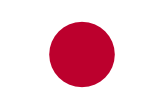
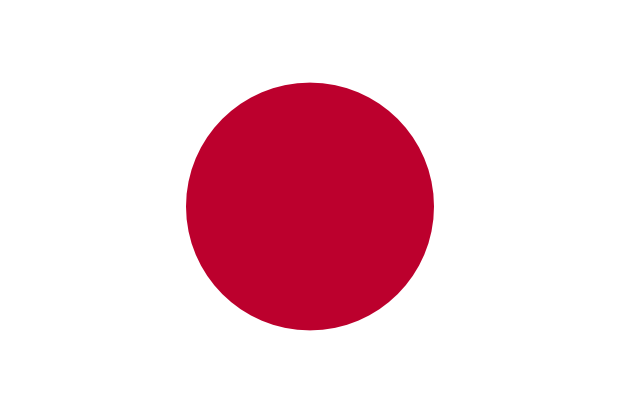
Country flag available in this resolutions
| Icon 32x21 | ![]() |
| Icon 88x59 | ![]() |
Japan
Japan, „The Land of the Rising Sun,“ is an enthralling East Asian island nation where ancient traditions seamlessly blend with advanced technology. Its unique geography, rich history, dynamic economy, and distinct demographic challenges have forged a society of profound cultural depth and global influence. Japan’s remarkable resilience, coupled with its immense cultural impact, makes it a truly captivating subject.
An archipelago of over 6,800 islands, with Honshu, Hokkaido, Kyushu, and Shikoku being the largest, Japan lies on the Pacific „Ring of Fire.“ This geological position results in frequent earthquakes, tsunamis, and volcanic activity, which have profoundly shaped its infrastructure and culture. Over 70% of the country is mountainous and forested, leaving limited arable land and concentrating its population in dense coastal plains. Japan’s climate varies from subarctic in the north to subtropical in the south, experiencing four distinct seasons and occasional typhoons.
Japan’s history spans millennia, from the prehistoric Jomon and agricultural Yayoi periods. While the imperial line has been a continuous symbol, political power often shifted to feudal military governments, or Shogunates, from the 12th century. The Tokugawa Shogunate (1603-1868) enforced a strict isolationist policy, „Sakoku,“ for over two centuries. The Meiji Restoration in 1868 rapidly modernized Japan, transforming it into a global power. Its expansionist ambitions led to World War II, followed by a post-war era of remarkable economic reconstruction under a new pacifist constitution, re-establishing Japan as a democratic and technological leader.
Japan faces one of the world’s most significant demographic challenges: a rapidly aging population with a low birth rate. With around 125 million people, Japan boasts the highest life expectancy globally, leading to a substantial proportion of citizens over 65. This „super-aged“ society strains social welfare and healthcare systems and causes labor shortages. The low fertility rate projects a future population decline. Historically, Japan has maintained low immigration, contributing to its ethnic homogeneity, though this is slowly evolving. Most of the population is concentrated in major urban centers like Tokyo.
Post-World War II, Japan achieved an „economic miracle,“ becoming the world’s third-largest economy. This growth was driven by a strong work ethic, high savings, and a focus on high-quality manufacturing and exports. Japan excels globally in automotive, electronics, robotics, and precision machinery. Despite a highly diversified economy and advanced infrastructure, Japan has faced periods of deflation, slow growth, and rising national debt since the 1990s—the „lost decades.“ Nevertheless, it remains a powerhouse of innovation, continually investing in research and development. Demographic shifts continue to pose long-term challenges for labor supply and domestic demand.
Japan’s culture is a compelling blend of ancient traditions—like Kabuki, tea ceremonies, and martial arts—and hyper-modern trends such as anime, manga, and video games, which enjoy immense global popularity. This duality reflects a society that deeply values its heritage while embracing innovation. The Japanese work ethic („ganbaru“) and emphasis on group harmony are foundational. Beyond its influential pop culture, Japan exerts considerable soft power through technological advancements, high-quality goods, and international aid, solidifying its role as a major global player.
Japan exemplifies resilience, innovation, and enduring cultural strength. From its dramatic landscapes to its futuristic cities, and from ancient wisdom to cutting-edge technology, Japan offers a profound lesson in adaptation. Despite significant demographic and economic complexities, its ability to reinvent itself, maintain social cohesion, and contribute globally ensures its continued prominence. Japan’s journey, marked by both challenges and triumphs, remains a compelling narrative of human ingenuity.
Information about country Japan
Automated text translation, excuse errors, please!
Informations are from the publication CIA The World Factbook.
Country Japan is situated in a location / continent East Asia. Japan has an area of 377 915 km2 and 127 368 088 residents. The highest point has a height 3 776 above sea level. and it is called Mount Fuji. The lowest point is located at the level of -4 above sea level and it is named Hachiro-gata. System of government is constitutional monarchy.The capital city is Tokyo. Japan has the international abbreviation JA.
Japan - economy
Total gross domestic product (GDP) is 4 497 000 000 000 $. Total gross domestic product per capita in purchasing power parity is 35 200 $. GDP grows by -0.70 % a year. Inflation (consumer price index) is equal to -0.30 % a year. Japan have 65 930 000 working-age population (from a total population 127 368 088 people). Unemployment is at 4.60 %. Japan issued 9.30 % GDP to healt care and 0,80 % GDP to army. The public debt of the country is 211.70 % GDP. The total amount of foreign debt is 2 719 000 000 000 USD.
Japan - transport and telecommunications
Japan has 1 210 251 km of roads, 27 182 km of railway lines and 175 airports. The total length of waterways (navigable rivers, canals, etc.) is 1 770 km. There is registered 684 ships.
Number of active mobile phones (sim card) in the country Japan is 129 868 000. Number of active fixed telephone lines is 64 585 000. Japan has 99 182 000 internet users, who have the available 63 466 000 Internet connections. Japan has been assigned a domain first Choose range .jp.
Japan - demography
As suggested above, Japan has 127 368 088 people. Population growth is in the amount -0.08 % per year. Number of children born per 1000 population per year is 8.39.Every mother has average 1.39 children. The infant mortality rate is 2.21 and maternal mortality 5.00 deaths per 100,000 births. Average estimated life expectancy makes 83.91 years. Mortality is 9.15 people per 1000 population per year.
Japan - energetics
Japan consumes a year 859 700 000 000 kWh of electricity. Annual electricity production is 937 600 000 000 kWh in power plants with a total installed electrical capacity 284 500 000 kW. Japan exports 0 kWh and imports 0 kWh of electricity per year Energy mix of power generation is as follows: fossil fuels: 63.9 %, nuclear energy: 17.2 %, renewable: 2.3 %, hydropower: 7.7 %. The country Japan is harvested annually 17 480 barrels of oil.
Flags of countries
World flags
World countries flags

Dále doporučujeme:
Tipy na užitečné webyOdkazy na zajímavé weby
Tipy na zajímavé weby
Partnerské internetové stránky
Naše tipy na užitečné weby
![]() |
![]() |
![]() |
![]() |
![]() |
![]() |
![]() |
![]() |
![]() |
![]() |
![]() |
![]() |
![]() |
![]() |
![]() |
![]() |
![]() |
![]() |
![]() |